Thoughts on the RBI's Independence
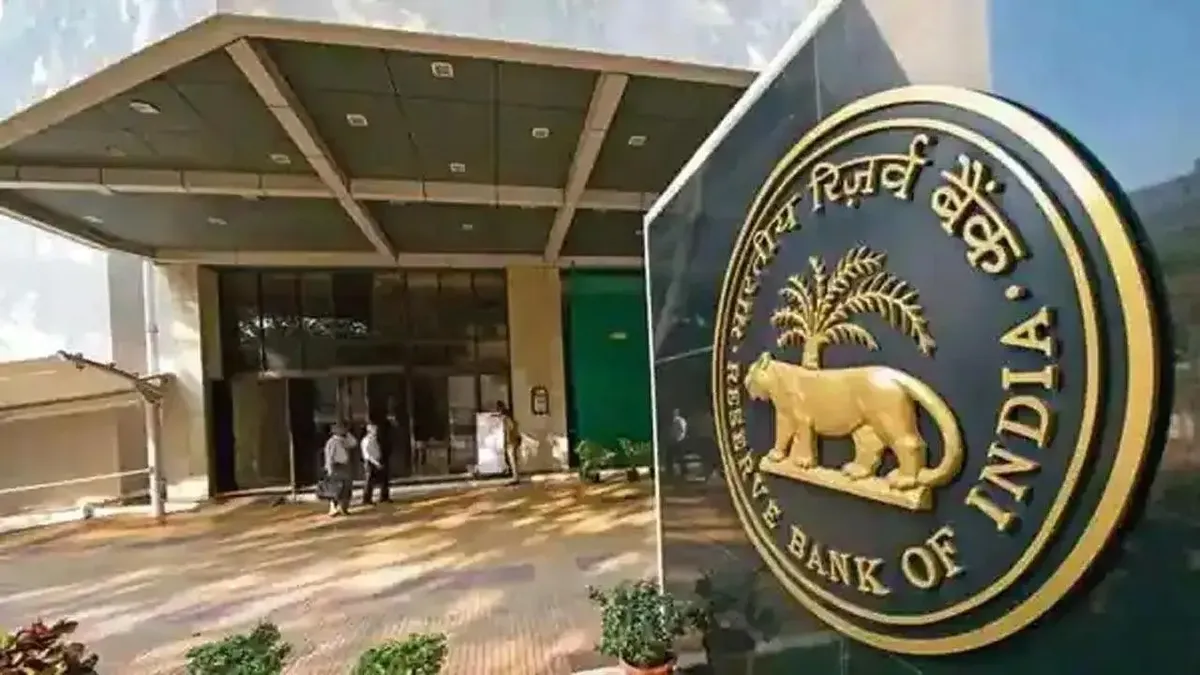
The country’s apex bank, the Reserve Bank of India, is back in the news again, and with concerns that have been aired earlier as well: on the autonomy and independence of the central bank. However, what makes it different this time around is the severity of the friction that currently dominates the atmosphere between the RBI and the government. In a recent lecture, the deputy governor of the RBI, Viral Acharya lashed out at the government for encroaching on the independence of the RBI and warned of disastrous repercussions if the role of the RBI was allowed to be undermined on purpose.
The disparaging remark triggered an avalanche of questions from commentators of diverse backgrounds. How much of autonomy should be granted to the Reserve Bank? Can the apex bank have a free run? More importantly, how much should the government ideally intervene in the day-to-day functioning of the RBI? The Reserve Bank as we know it today, was first institutionalised by the RBI Act (1934) under the British Raj. Originally, the role of the RBI was “to regulate the issue of Bank notes and the keeping of reserves with a view to securing monetary stability in India and generally to operate the currency any credit system of the country to its advantage.” In a world today which is highly interlinked and of which India aims to be an integral player, sour relations between the prime banking institution and the government can prove to be a major hurdle to a growing economy.
Exploring the RBI's Claims
In this power tussle, both parties involved demand a fair share of their rights. The RBI has put up certain preconditions that it believes are essential for the healthy run of the Indian economy.
For one, it wants to exercise greater control over the Public Sector Banks. A volley of accusations were fired at the RBI after the humongous 13,000 crore fraud at Punjab National Bank. Urjit Patel, the present governor of the RBI, promptly responded by making it crystal clear that the RBI had far lesser control over the Public Sector Banks than it enjoyed over the private lending institutions. A quick fact-finding session revealed that RBI’s legal powers to supervise and regulate PSBs are very limited. It does not hold the authority to remove the PSB directors or the management, who are appointed by the government of India, and neither can it force a merger or trigger the liquidation of an ailing public bank. Its position in regard to any public bank is limited to that of a mere watchdog. Thus, in effect, the governor rightly rolled the ball back into the hands of the government by calling for effective legal reform that would grant the RBI supervisory powers over the Public Sector Banks, permitting it to do the needful at the right moment of time.
Certain opinions resonate that the Public Sector Banks could be recapitalized entirely if only the RBI paid a larger dividend to the government. The Reserve Bank feels that the Government should not mandate the quantum of dividends to be paid to it. The RBI generates surplus profits in a number of ways. It does so by issuing deposits to commercial banks, which are its liabilities, and on which it pays no interest whatsoever. It also buys financial assets from the market, typically domestic and foreign governmental bonds, which pay handsome interests. So, a large part of the income is generated simply because the RBI has not the need to pay the interest on its liabilities. This surplus profit is more than all of the public sector banks put together. This belongs entirely to the citizens. Thus, after setting aside what is needed to be retained to retain the creditworthiness of the RBI, the Board pays out the remaining surplus to the government. In 2016, the amount was 65,876 crores, in 2017 it lowered to 30,659 crores, and in the current financial year it was pegged at 50,000 crores.On delving into former governor Rajan’s thoughts on the question of payable dividends, he is of the opinion that a special dividend would not help the government with its budgetary constraints. In reality, much of the surplus that the RBI generates comes from interest on government assets, or monetary gains it makes off other market participants. When this money is paid back to the government, the RBI in essence puts it back into the system- thus entailing no additional reserve creation.
Third, the RBI is unsatisfied with recent government proposals to set up an independent payments regulator outside the purview of the RBI. An inter-ministerial panel established to finalise the Payment and Settlement Systems Act, 2007, had recommended that the payments regulator should be an independent regulator with the chairperson appointed by the government in consultation with the RBI. In a dissent note submitted by the RBI, the RBI noted that there was no need for such an independent regulator. It cited the report by the Ratan Watal committee on digital payments, which recommended setting up of the Payments Regulatory Board (PRB) within the overall structure of the RBI.
Why is the Government miffed?
The government, however, has other reasons to wage a high-pitched war against the RBI. It seems to have developed a prima-facie dislike for the RBI, which is understandable: the RBI has railed against most of the government plans which disregarded economic sense. It complained that the RBI had kept it in the dark as far as the reforms in the approach to NPA handling was concerned. The Centre views the Prompt Corrective Action (PCA) framework by the RBI, which restricts weak banks from lending, as a key factor behind the ongoing liquidity crisis. The Reserve Bank’s circular on February 12, 2018 highlighted the importance of assets recognition as a step to mop up public banks from the bad loan mess. It scrapped all previously existing mechanisms and declared that even if the default was for a day, the defaulter must be dragged to an insolvency court and the asset must be declared as an NPA- thus ending the practice of forbearance. All these measures were taken in the public interest and in the hope for long-run gains. While the government is looking at growth, the RBI aims for stability. As was already discussed, the government also wanted the RBI to pay it higher dividends to gap its fiscal deficit, but RBI had expectedly negated the request. The government was also considerably miffed when the Reserve Bank declined the request to relax norms for lending to micro and small enterprises. This was subsequently a topic of discussion when Rajan in a note to the Parliamentary Estimates Committee pointed out that schemes like MUDRA and Kisan Credit Cards, despite being popular, could serve as potential sources of credit risks.
A supreme example of the consequence of subverting the RBI’s advice was the demonetisation debacle. On November 8th, 2016, the government announced out of the blue the scrapping of high-value currency notes in use; effectively wiping out currency worth 15.41 lakh crore from circulation. The government ignored several appeals from the-then governor of the RBI, Raghuram Rajan, to not tread on this experimental path for an economy so large in scale.** This gave rise to a massive cash crunch which subsequently knocked out many small to medium scale industries** which were primarily dependent on cash as a form of business. More so, this was a slap in the face for the government, too- which had claimed that the demonetisation exercise was carried out with an intent to dissolve the black money in existence, worth around 3 lakh crores. The RBI, after undertaking the tedious process to oversee the counting of uncountable number of returned notes, reported that 99.3% of the demonetised notes had found its way into the bank’s vaults, despite stringent restrictions in play. Furthermore, the government’s back-up claim of demonetisation having boosted the digital economy could not be verified in the absence of any reliable sources of data. While the benefits of demonetisation may require some pondering, its adverse impacts are clear: it hurt the economy growth rate by a staggering 1.5%.
The Way Forward
Unlike armchair politicians and commentators, the RBI cannot afford the luxury of economic inconsistency. It is often the scapegoat for under-performance, and is blamed rather unjustly for every other economic fluctuation that arises. In this environment, where the central bank has to occasionally stand firm against the highest echelons of central and state governments, its decisions to not waver from the targets of economic stability and prudence must be commended. At the same time, while the ability of the RBI to say ‘no’ in the face of adversities must be protected, it also cannot be free of all constraints and should work under a framework set by the government. In this context, certain suggestions come to my mind.
First, the responsibilities of the RBI must be clearly defined. When the responsibilities of the RBI are fuzzy, its actions can be subject to continuous questioning. Instead, if the competent authorities outline a framework within which the RBI can operate, it can steer its course consistent with those responsibilities and can be held accountable for outcomes in those fields. Inflation targets set by the government serve as a good example. Second, the freedom of the RBI to take key operational decisions from time to time is important. The RBI is tasked with the job of maintaining macroeconomic stability, and this requires the RBI to often turn down attractive proposals for the short run. With passing days, government entities are increasingly seeking oversight over various sectors of the RBI’s work. Such oversight by non-technical personnel only leads to delay in the decision making process and is not desirable. Third, and perhaps the most important of them all, the RBI must continue to fill its vacancies through clearances approved by the RBI Board and not put in place government officials who may have very little knowledge of the technicalities involved. Formulation of the Monetary Policy of India is a brilliant example of the benefits that accrue if an independent entity is allowed to deliberate on the most crucial economic policy in India. RBI, through an effective monetary policy has been able to meet the indicator targets that it had set for itself- and it is running the show by itself, through independent analysis.
Democracies thrive on the independence of regulators, but today India finds itself ruing its absence. This contrariety is at the heart of the fault line between the two parallel institutions. Truly, institutional independence lies at the heart of any liberal democracy. If we cannot protect the RBI’s independence, and other institutions of similar importance that hold the national rudders, we cannot sustain national growth for long. One can only hope for sense to prevail, and an end to the the rather unsavoury tensions that exist at present.